
Previous Residents at a Williamson County Address
Previous residents are found through a chain of sources with different time spans and purposes. The Assessor and county GIS begin the current parcel record. Register of Deeds material supplies legal-title links. The Archives and library then help move farther back, while newspapers, census records, maps, probate, and obituaries provide household or time context. An ownership record, a postal address, and an occupant clue are not interchangeable. Keep the parcel ID, lot, subdivision, legal description, source date, and exact name spelling together as the trail moves backward.
| Source | Years It Covers | Where Held | What It Shows |
|---|---|---|---|
| Assessor property search | Current data; online start not stated | Williamson County Property Assessor | Owner, property address, city, parcel description, lot, sale date, and price headings |
| GIS parcel layer | Current service; layer date not stated | County Internet Mapping and REST layer | Parcel, situs, owner and mailing fields, subdivision, deed-book, and transfer clues |
| Register deed index and images | 1/1/1981-present | TitleSearcher and Register of Deeds | Grantor, grantee, instrument, book or page, image reference, and chain links |
| Old deed index books | 1951-1980 | Register/TitleSearcher route | Earlier grantor-grantee path; live field inventory was not captured |
| Non-indexed deed images | Books A1-379 | Register office route | Historical images that are not fully indexed or verified |
| Archives deed index | 1786; 1792-1963; and 1977 entries in the index | Archives index and Reading Room | Grantor, grantee, year, document, and book or page reference |
| WCPL directories and newspapers | Directory years not published; newspaper runs vary by title | WCPL Special Collections | Address, household, notice, obituary, and local-history clues |
Start at the row that covers the needed era, not at the source that merely has a familiar name. Deeds are the best route for title continuity. A library directory, when a verified volume exists, may identify a listed household at a point in time. The archive index is a reference to an original source, not proof of a current address.
Note: The table separates ownership, parcel, and household sources because each describes a different relationship to an address.
Start Williamson County Address History
The Williamson County Property Assessor search is the first current source for a past-residents trail. Its exposed optional fields are Owner Name, Property Address, Subdivision, City, Lot Number, Map, Parcel, and two sale-date filters. Search results show Owner(s), Property Address, City, Parcel Description, Lot Number, Sale Date, and Price. Select a parcel for available details, but the inspected live response did not expose a full parcel card or its complete field set.
The current parcel is a bridge, not a conclusion about residence. County GIS distinguishes the situs address from owner mailing fields. A situs address identifies the land; a mailing field directs tax correspondence and can be elsewhere. Save a parcel ID, subdivision, lot, legal description, deed-book clue, and transfer date before opening a deed index. That record set keeps later previous-residents searches tied to the same property even if a street label or number changes.
Address flow: property address → parcel and legal description → current owner as grantee → acquisition deed → named seller as prior grantee → older book or Archives reference.
Williamson County Previous Residents After 1981
The practical online cutoff is 1981. The Register of Deeds reports deed index information and deed images from January 1, 1981 to the present. Use the current owner as a grantee search, open the acquisition deed, and identify the seller or grantor. Then search that seller as a grantee for the preceding acquisition. Repeat the sequence while recording the legal description, lot or subdivision, deed type, recording date, book or page, and spelling of each party. TitleSearcher cross-references and refer-backs are useful chain clues.
TitleSearcher’s linked grantor-grantee search route is the source represented in the current-search capture.
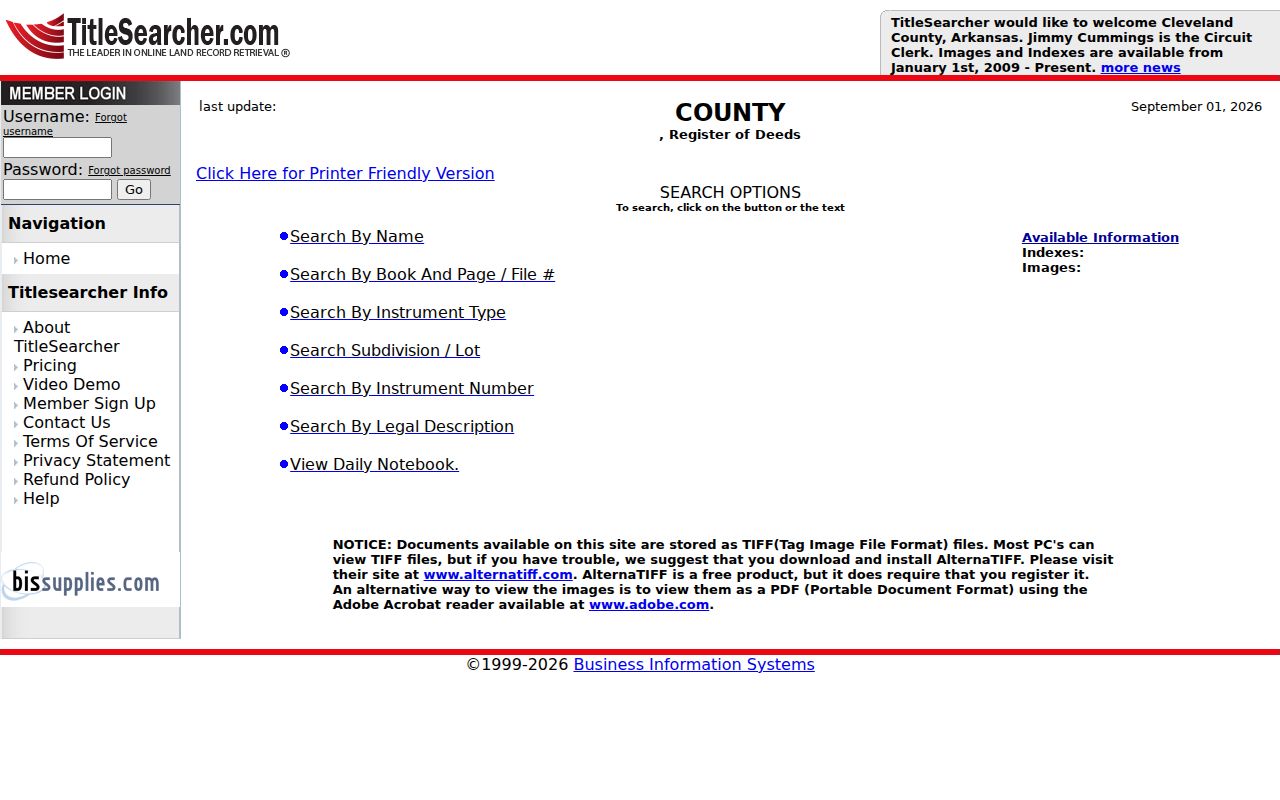
The capture supports the deed-search step, but it does not supply a verified live field list or result limit. “Not Indexed” in the vendor material means an instrument has not been verified or certified. Images may be PDF or TIFF, and access is by subscription or pay-as-you-go. Do not rely on an address alone, since the deed may use a legal description rather than its postal form.
Williamson County Previous Residents in 1951-80
When the online deed trail reaches 1981, it has not reached the end of the county record. The documented bridge is the old index books for 1951-80, followed by non-indexed deed images in Books A1-379. Those labels are specific to Williamson County’s Register route and should remain in the research notes exactly as shown. They identify a change in access method, not a missing period of land records. Check the Register’s coverage information and confirm the appropriate counter or book route before treating an image as unavailable.
Older instruments may need a book and page, legal description, or cross-reference from the newest deed. Search beginning and end dates carefully because TitleSearcher’s FAQ describes different behavior for one-sided date searches. The county coverage page shows a monthly primary-user subscription, additional-user cost, and pay-as-you-go deposits and image charges, but the live secure form did not reveal every current control. Check the vendor terms and office practice before ordering a record.
Note: A deed transfer date does not by itself establish a move-in date, a household, or who lived at the property.
Williamson County Previous Residents Before Indexing
For the earlier trail, the Archives deed index contains selected deed material dated 1786, 1792-1963, and 1977. It shows grantor or grantee, year, document, and book or page. The index is free and can point to a microfilm reel, bound book, or loose record in the Reading Room. It does not mean that every item is scanned or that all deeds from a year are online. The Archives warns that modern deeds belong with the Register, so use the custodian that matches the series.
This is the local comparison that prevents a false stop: current deed images use the paid Register path, while the Archives index is a free source locator for older material. The Archives Reading Room is at 611 W. Main Street in Franklin. Staff can help by phone, mail, or email and can arrange copies. A focused request should name the parcel or legal description, party variants, approximate period, and book or page when known.
Williamson County Previous Residents at Special Collections
WCPL’s Genealogy and Local History service is the human-assisted route for a house-history question. It names city directories, newspapers, wills and inventories, WPA records, church and cemetery material, court records, yearbooks, tax records, local histories, and other sources. The research did not locate a dedicated local house-history guide or a published paid research service. Ask Special Collections for directory volumes, newspaper reels, Sanborn maps, tax material, and cemetery books tied to the address or family instead of assuming a ready-made report exists.
The library’s genealogy and local-history service is the source for this research route and its documented collection scope.
Bring the current address, old spelling variants, parcel or lot details, a date range, and any deed book or page already found. That narrow handoff lets staff direct the search to a relevant reel, volume, newspaper, or archive reference rather than asking for a complete list of former residents.
Note: Special Collections can point to material but does not publish a complete house-history file or confirmed directory run.
Franklin Maps for Williamson County Previous Residents
Franklin Sanborn maps add physical context to a past-residents trail. The Heritage Foundation confirms Franklin editions for 1888, 1893, and 1898, and the Library of Congress provides a January 1898 six-sheet scan. Compare an old building footprint, street layout, or land use with the current parcel map. This can help test whether a changed address still refers to the same lot or block.
Sanborn maps do not name occupants. A map must be paired with a verified directory, deed, newspaper notice, census record, probate reference, or other named source. The local research found no verified countywide renumbering date or confirmed street-name conversion. When an old number fails, use the deed’s legal description, plat, subdivision, lot, adjacent names, and map context rather than inventing a conversion.
Trace Past Owners in Williamson County
A chain of title is the sequence of recorded transfers for the same land. It is useful for prior ownership, not a complete record of every previous resident. Work one instrument at a time. The current parcel, legal description, lot or subdivision, and book or page are the continuity checks. A seller can be an estate, trust, or organization, and a mailing address can differ from the parcel. Those differences are reasons to verify the record, not reasons to attach a person to an address.
- Locate the current parcel in the Assessor search and save the owner, parcel ID, subdivision, lot, legal description, deed-book clue, and sale or transfer date.
- Search the current owner as grantee in the 1981-present Register index, using the legal description or lot when the address does not match.
- Open the acquisition instrument and copy its seller, recording date, document type, book or page, and refer-back references.
- Search that seller as a grantee to locate the earlier acquisition, then compare the parcel and legal description before continuing.
- At the 1981 cutoff, shift to 1951-80 old index books, Books A1-379, and then the Archives deed index or Reading Room route.
- Grantor
- The party transferring an interest in a recorded instrument, often the seller in a conveyance.
- Grantee
- The party receiving that interest. Searching a former seller as a grantee can reveal an earlier acquisition.
- Chain of title
- The documented series of land transfers linked by the same legal description, parcel, lot, or book reference.
- Legal description
- The land description in the recorded instrument, such as lot and block or metes and bounds. It is often steadier than a postal address.
Past Williamson County Households in Directories
Ownership is only one layer of a past-residents search. A verified city directory volume may offer an address or household clue, and newspapers can date a notice or advertisement. The library confirms the city-directory category but does not publish local volume years, publishers, or a reverse-directory inventory. Ask staff whether an address or criss-cross section is present for the particular year. The collections themselves and their access limits are detailed in the Williamson County city directories reference.
Federal census records add a household snapshot at census time. The current public release pattern makes records through 1950 available under the 72-year rule. They are not annual address records, and an address may be written differently from a directory or deed. Pair a directory year with the nearest census, then test the same name and place in an obituary, probate file, burial record, tax source, or newspaper. The Archives index has record groups for each of several of those endpoints.
- Confirm the directory year and copy the address and spelling from the actual volume.
- Choose the nearest publicly released federal census and compare the household only at that census date.
- Use a newspaper notice, deed, tax record, or map as a time bridge between the two sources.
- Check probate, obituary, or burial references when a name vanishes, then request the underlying record if context is needed.
Probate can identify an executor, heirs, and estate property. Obituaries and death notices can supply family or former-place clues. Neither one proves that a surviving person currently lives at the old address. Treat every historical record as dated evidence.
Note: Treat each household source as dated evidence, then retain the citation and original wording in the research log.
Williamson County Previous Residents Limits
Past residents research is for family history, estate and heir questions, local history, and a property’s documented past. It cannot create a complete record of who lived at an address. Parcel owners, deed parties, postal addresses, directory occupants, and census households describe different relationships. Sealed records, protected information, and Safe at Home addresses remain restricted. Tennessee’s public-records process is a custodian route for existing non-exempt records, not a request for the county to assemble a new research file.
Lawful use. Use Williamson County past-resident records for personal historical research and do not use old address information to stalk, harass, or harm any person.